

Metabolic Breath Analysis
Deep insights into your metabolism & cellular function.
Learn about your metabolism with the air you breathe.
-
![]()
Standard Insufficient
We can measure health through various methods, such as exams, lab tests, & radiology. While helpful, none of these can reveal metabolic functions.
-
![]()
Measuring O2 & CO2
All biological processes rely on respiration of oxygen (O2) and carbon dioxide (CO2). Analysis of these gases provides a deep understanding of your physiology.
-
![]()
Metabolic Measures
Metabolism = all chemical reactions that provide energy. We measure total “metabolic rate” (calories per day), fat-burning efficiency, VO2 Max, & more.
-
![]()
Limitations & Risk
Our Metabolic Breath Analysis can reveal hidden inefficiencies that are preventing you from reaching optimal health and increase your risk of chronic illness.
-
![]()
Lifestyle Precision
Whether your goal is weight loss, improved fitness, or lowering disease risk, this evaluation can be used to customize nutrition, exercise, & other lifestyle efforts.
-
![]()
Track Progress
As your physiology improves—faster metabolism, enhanced fat burning, and higher VO2 max—we provide feedback to make sure you remain on track.





Testing Options
Resting Metabolic Analysis
-
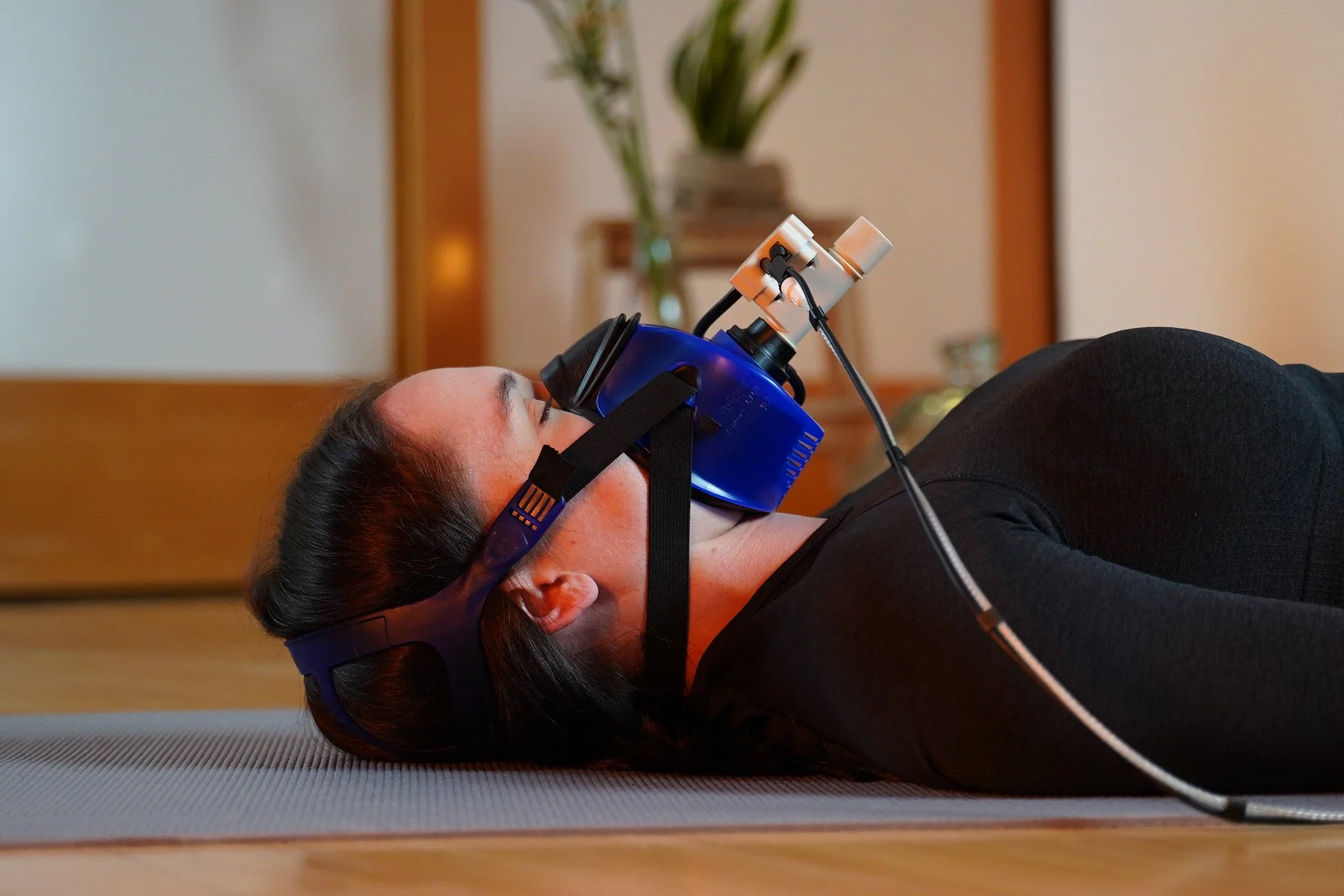
Ever wonder why you need to eat fewer and fewer calories to lose or maintain weight? On average, a person’s resting metabolic rate (RMR) — the amount of energy burned in a rested state — decreases with age. However, this is not inevitable or a matter of destiny. This is largely a byproduct of reduced skeletal muscle, which consumes a large amount of energy.
An RMR test allows you to track your metabolic rate, as well as precision to make smart nutrition targets. -
Metabolic flexibility is the body’s ability to switch between carbohydrates and fats for energy depending on availability. In a rested state, a healthy metabolism will predominately burn fat in a rested (inactive) state. However, many people rely too much on carbohydrates—an inability to burn existing body fat stores.
-
Metabolic Rate = total amount of “calories” (energy) burned per day in a rested state.
Metabolic Efficiency = The percentage of fat vs. glucose being burned in a rested state.
-
With these results, we can offer more precise lifestyle advice on nutrition and physical activity, including:
Calorie targets for weight management
General activity and exercise recommendations to improve fat-burning (Exercise-based testing is a more precise approach.)
-
Pricing
Single Test = $150
Package of 4 Tests = $400, or $100/test (done every 3-4 months)
*NeuCare Primary Care members receive a 30% discount on the above pricing.
Optional add-on:
Lactate testing = $29
Exercise Metabolic Analysis (VO2max)
-
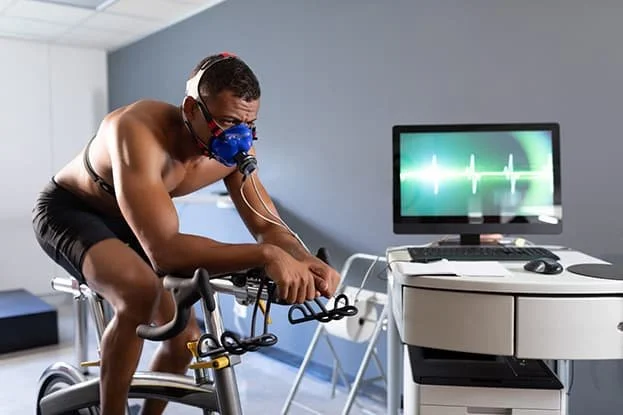
VO2max — the maximal rate at which your body takes in, transports, and uses oxygen during intense exercise — is more than a fitness metric. It’s a clear, actionable window into physiological resilience, metabolic health, and true biological aging (life expectancy) (1). For clinicians, patients, and anyone serious about longevity, VO2max should be front and center.
(1) Large epidemiological studies show VO2max is one of the strongest predictors of all-cause and cardiovascular mortality, independent of traditional risk factors. Each 1 MET (~3.5 mL/kg/min VO2) increase corresponds with a meaningful drop in mortality risk.
-
Integrative measure of whole-body health: VO2max reflects cardiovascular function, pulmonary capacity, skeletal muscle oxidative power, mitochondrial health, and nervous system coordination. Unlike isolated biomarkers (cholesterol, blood pressure, glucose), VO2max quantifies the integrated performance of multiple organ systems that actually determine survival under stress.
Direct measure of physiological reserve: Biological age is about functional capacity, not just years. VO2max measures cardiorespiratory reserve — the ability to meet metabolic demands. Higher reserve translates to lower risk during acute illness, surgery, and chronic disease progression, and correlates strongly with preserved independence and quality of life.
Sensitive to lifestyle change and intervention: VO2max improves with targeted, evidence-based interventions — especially interval and aerobic training, but also resistance work, weight management, and smoking cessation. That makes it a modifiable, actionable biomarker for clinicians and patients aiming to slow biological aging.
Predicts disease risk beyond conventional labs: Low VO2max precedes and predicts diabetes, hypertension, cardiovascular events, cognitive decline, and frailty better than many standard tests. It captures early dysfunction before pathology shows up on static lab values.
Valid across ages and populations: VO2max declines predictably with chronological age but varies widely among peers. Those with higher VO2max at any age have the physiological profile of someone younger — a direct measure of biological age rather than calendar years.
-
The body predominantly utilizes fat and glucose (carbohydrate) as its energy sources. In a resting state, the percentage of fat will be at its highest level. As we increase intensity, our body burns more fat per minute until a certain point, at which the demands require switching to glucose as fuel. We can precisely measure this crossover point, aka. FatMax or VT1, with this analysis.
-
In addition to FatMax, the analysis provides an accurate measurement of your ideal “training zones” from rest through Zone 5. This data enables precise heart-rate cutoffs in your training program—including updates to your smartwatch!
-
VO2max: Maximum oxygen uptake by tissues at highest intensity
Exercise energy zones: Activity and exercise recommendations based on heart zones
-
Pricing
Single Test = $175
Package of 4 Tests = $500, or $125/test (done every 3-4 months)
*NeuCare Primary Care members receive a 30% discount on the above pricing.
Optional add-on:
Lactate testing = $59
Comprehensive Metabolic Analysis

-
To get the most comprehensive view of your metabolism, we perform a rested analysis and during an exercise protocol.
-
Your results will include everything that is provided in the resting and exercise-based analysis.
-
All of the lifestyle and exercise recommendations provided by the resting and exercise-based testing.
-
Pricing
Single Test = $225
Package of 4 Tests = $800, or $200/test (done every 3-4 months)
*NeuCare Primary Care members receive a 30% discount on the above pricing.
Optional add-on:
Lactate testing = $69

Take the first step to optimizing your lifestyle.
Clinical-Grade Gas Analyzer
HOW DO YOU MEASURE OXYGEN AND CARBON DIOXIDE?
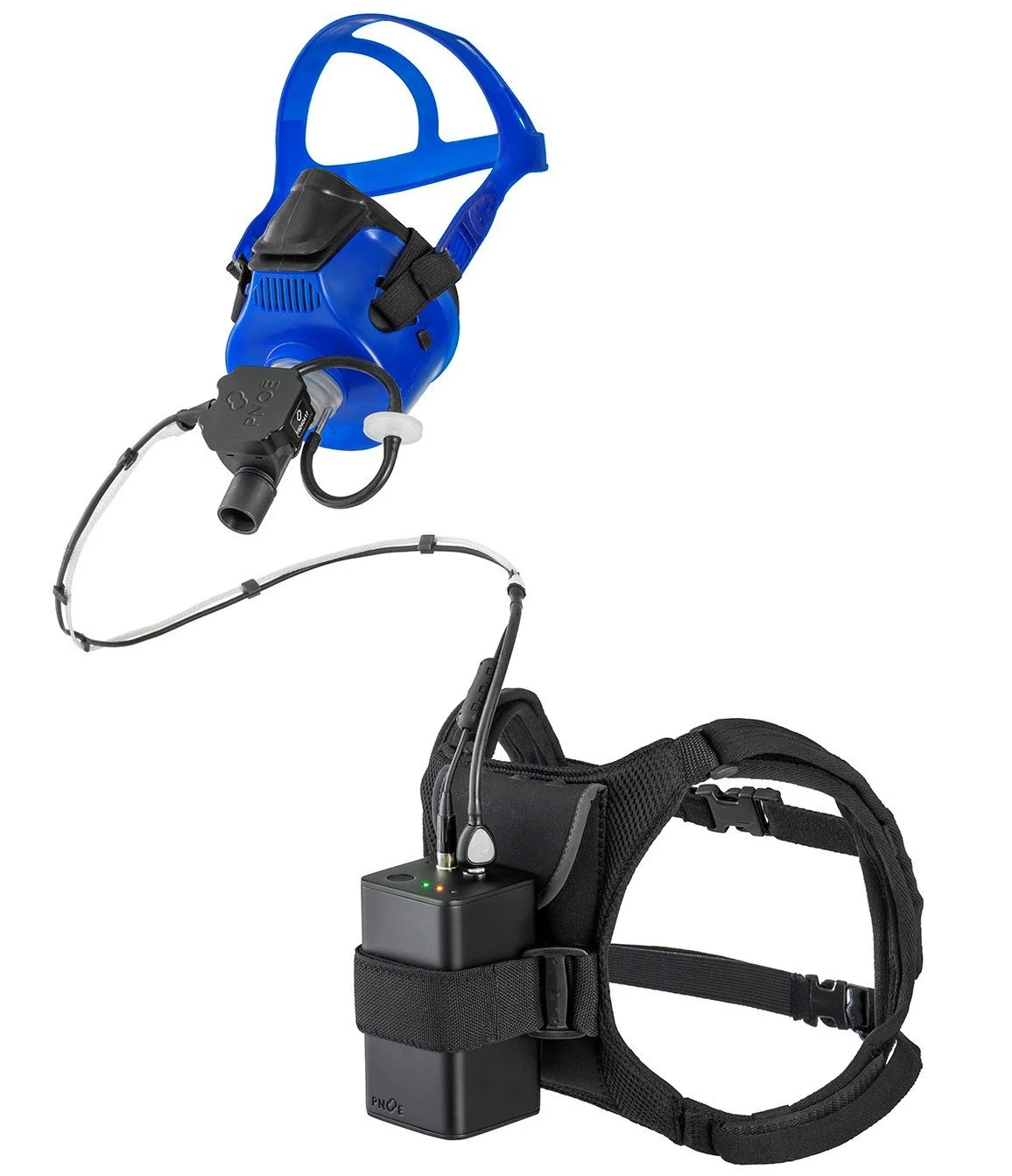
We use a PNOE device that measures gases in your breath using a mask and sensors during rest or exercise (like walking/biking) to capture oxygen (O₂) consumption and carbon dioxide (CO₂) production. The device’s sensors also measure the volume of air you inhale and exhale, as well as your heart rate. Combining this data through advanced analytics enables calculations of many aspects of your physiology.
VALIDATION
PNOĒ devices are validated against traditional metabolic carts (like COSMED K5) by comparing breath-by-breath measurements (VO2, VCO2, RER) using statistical methods like Pearson's correlation (expecting high 'r' values, around 0.98) and Bland-Altman plots to check for agreement/bias, and Intraclass Correlation Coefficients (ICCs) for reliability, showing excellent agreement (ICC > 0.90), confirming PNOĒ offers clinically comparable, highly reliable, and accurate data in portable settings.